Stronger in CirclesCircular TechExpertinterview
Circular Tech Through an Investment Lens – A Conversation with Dr. Jules Wurlod
Veröffentlicht am 6. Nov. 20266 min Lesezeit
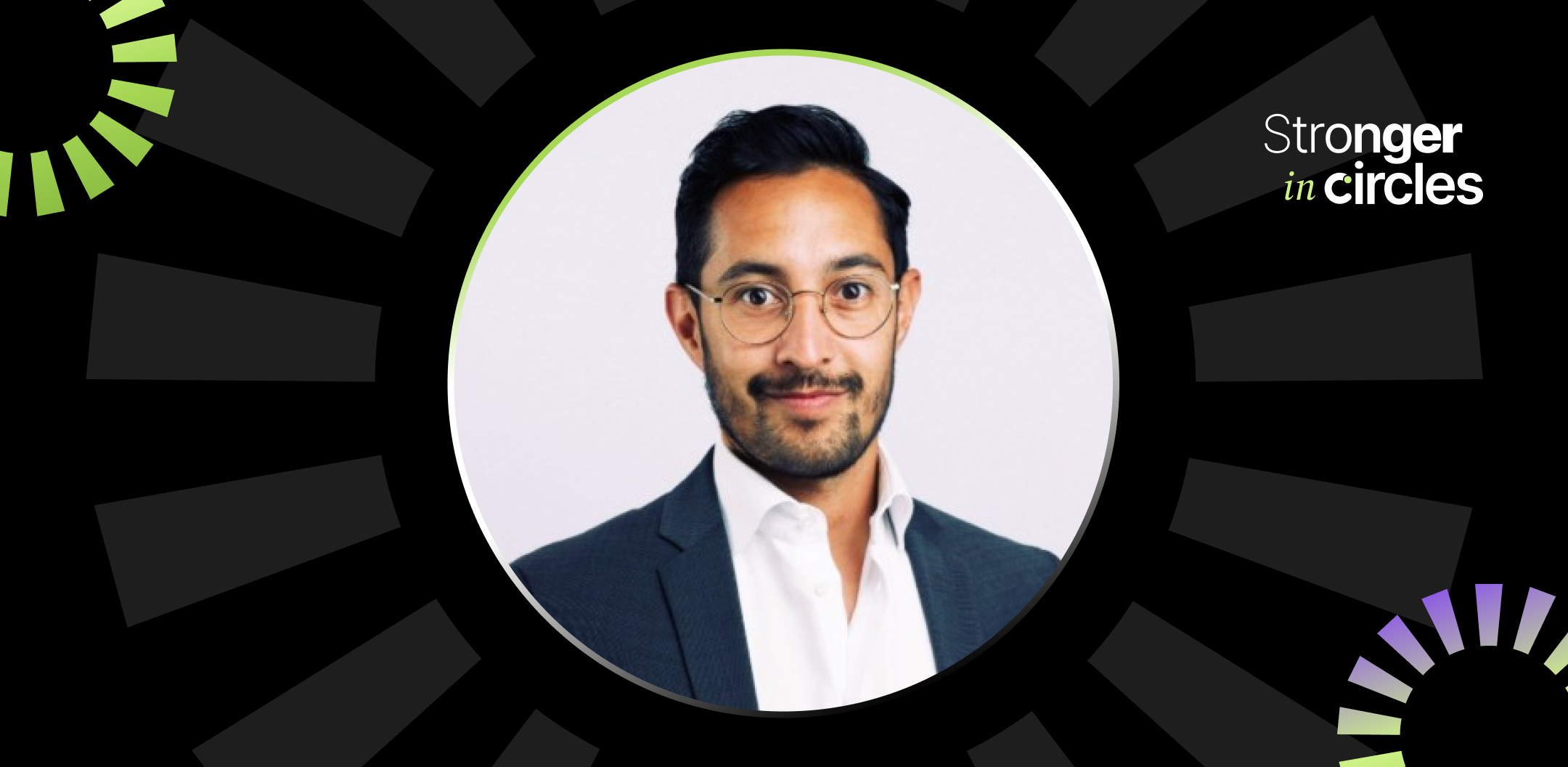
Dr. Jules Wurlod, Managing Director and Global Head of Circular Tech at IA Global Capital
With #StrongerInCircles, we speak with people looking at circularity from different perspectives – and share the experiences, ideas and market insights shaping the space.
For this edition, we spoke with Dr. Jules Wurlod, Managing Director and Global Head of Circular Tech at IA Global Capital.
Jules’ path into circular tech started in environmental economics and has since taken him through strategy, ESG and investment banking. Before joining IA Global Capital, he spent six years at Houlihan Lokey, where he worked on circular tech and sustainability with a focus on the hardware ecosystem.
That gives him a perspective we have not yet explored in this series: what does circular tech look like through an investment lens?
In our conversation, we talk about what first drew him to the circular economy, what he sees as the forces currently shaping the sector and how he views the B2B and B2C markets for refurbished IT.
We also discuss supply-chain risk, critical raw materials, regulation and why IA Global Capital is building a dedicated circular tech vertical.
Jules, you did a PhD in environmental economics before going into banking. What pulled you personally into the world of circular economy – and what keeps you there?
What drew me to the circular economy is that it is one of the rare areas where economic and environmental interests genuinely align. Unlike many other sectors, where environmental considerations often come at an economic cost, the circular economy offers genuine win-win opportunities. Extending the lifespan of IT devices, giving them multiple lives through refurbishment and reuse, and making repair a priority all create economic value while reducing e-waste, the demand for virgin raw materials, and the environmental footprint of our traditionally linear economy. In other words, what makes sense for the planet also makes good business sense. And there is one more reason I find this field particularly compelling: the circular economy passes what I like to call the “grandmother test.” It is rooted in a simple, age-old principle — make the most of what you have, avoid waste, and use things for as long as possible. It is intuitive, easy to explain, and resonates with almost everyone. That simplicity is also what gives it such powerful momentum.
You spent years working at the intersection of strategy and ESG.... now you're a Managing Director at a tech investment bank. Is circular tech a sustainability story – or just a good sector?
To my earlier point, circular tech is one of those rare sectors where sustainability and strong investment fundamentals genuinely go hand in hand. From an investor's perspective, it is a sector benefiting from some of the most powerful structural tailwinds in the market. Investors are always looking for the next big thing, and we have witnessed an unprecedented wave of digitalization. And as our economies are more digital than ever, AI is further accelerating that transformation, with trillions expected to be invested in data center infrastructure over the coming years. There is also something we sometimes overlook: all that data, AI, and computing power ultimately depend on physical hardware – servers, storage systems, networking equipment, and countless other components. With supply chains under tremendous pressure with months of waiting time to get access to new hardware as hyperscalers get priority access, we need a strong circular ecosystem that ensures devices and components are redistributed across the ecosystem and kept in productive use for as longer.
What is actually driving circular tech deals right now: climate targets, cost, or supply-chain risk?
I would say it is primarily a combination of cost considerations and supply-chain risks, with the latter becoming increasingly important. Given how uncertain and volatile global trade has become, governments around the world are growing increasingly concerned about securing access to critical resources. The European Commission, for example, has maintained a list of critical raw materials for years — including lithium, cobalt, and rare earth elements — whose supply is often highly concentrated in a handful of countries, many of them outside the EU. And these concerns existed long before the recent tariff wars, geopolitical tensions, and conflicts in the Middle East. What has changed is the sense of urgency. In that context, the ability to recover valuable materials from products already in circulation — what we call “urban mining” — is becoming strategically important. It is no longer just about reducing waste or meeting climate targets. It is increasingly about securing resources, reducing dependencies, and building more resilient supply chains. And that is a powerful driver for investment and M&A activity in the circular tech sector.
Looking at B2C and B2B markets for refurbished IT hardware: which developments excite you most? Are there any headwinds you anticipate for the industry?
I think B2C and B2B respond to quite different dynamics. On the B2C side, I am a big believer in the fundamentally altruistic, environmentally conscious nature of human beings. But I am also a realist. Many households have seen their purchasing power come under significant pressure, making affordability an increasingly important factor in purchasing decisions. Against that backdrop, buying refurbished IT hardware should be a no-brainer: it is cheaper, better for the environment, and often just as good as buying new. Yet, as a former researcher, I have learned that human decision-making is not always as rational as economists would like to believe! Consumer perceptions, trust, and the appeal of owning something new still play a significant role. Overcoming these barriers is both a challenge and a tremendous opportunity for the industry.
On the B2B side, I believe regulation is what really moves the needle. The reality is that, despite ambitious climate commitments, many companies are still falling short when it comes to translating their targets into concrete action. Setting a net-zero target is one thing; fundamentally changing the way your business operate is quite another. This is where regulation can make a real difference, by turning good intentions into tangible obligations and encouraging companies to integrate circularity into their operations. So, if I had to identify the main headwinds, I would say consumer behavior on the B2C side, and the gap between corporate climate ambitions and actual implementation on the B2B side. Both are significant challenges, but also represent substantial opportunities for the circular tech industry.
At IAGC you are building circular tech as new vertical. Why is this a logical expansion for the bank?
Our bank has always focused on highly relevant, clearly defined niches within the broader technology ecosystem. We believe this is what good investment banking is all about: genuinely adding value through deep sector expertise, a thorough understanding of the industry's dynamics, and a network of highly relevant relationships. Circular tech is a natural extension of that philosophy. It is a fast-evolving sector with its own business models, market dynamics, and ecosystem of investors and strategic buyers. Understanding these nuances is essential if you want to provide meaningful advice to clients. And I think this approach is becoming more important than ever. In a world where AI agents can increasingly perform many of the routine tasks traditionally carried out by bankers, deep industry knowledge and, above all, personal relationships become the real differentiators. Technology can automate analysis, research, and processes, but it cannot easily replicate the trust and credibility built through years of working with people in a particular industry. The days when you could approach clients with generic sector knowledge and little personal connection are, in my view, coming to an end. Clients expect advisors who truly understand their business, know the relevant players, and can open the right doors. That is precisely the kind of banking we believe in at IAGC, and why building a dedicated circular tech vertical makes perfect sense for us.